
Facial Fracture Repair in Austin, TX - Adults and Children
Dr. Khansa is a Harvard Medical School graduate, certified by the American Board of Plastic Surgery, and named an Austin Monthly Top Doctor in 2026. Dr. Khansa has evening and weekends appointments available for your urgent needs.
A broken or fractured bone in the face can affect both appearance and function. Early evaluation by a board-certified plastic surgeon is essential to ensure optimal healing is achieved.
Dr. Khansa provides facial fracture evaluation and repair for adults and children in Austin. As a board-certified plastic surgeon, he will help determine whether fracture repair is necessary, and will help optimize your appearance and function after repair.
Schedule your facial fracture evaluation in Austin today
Ready to schedule? Dr. Khansa offers evening and weekend appointments.
📍 3305 Northland Dr., Suite 210, Austin, TX 78731
📞 (512) 615-6566 (call or text)
🗓️ Schedule online below
Jump to Section
Why facial fractures require evaluation by a board-certified plastic surgeon
When does a facial fracture need surgery?
Facial fractures in children and teens
Recovery after facial fracture repair
Why choose Dr. Khansa for facial fracture evaluation and repair in Austin?
What is a Facial Fracture?
A facial fracture is a break or crack in one or more bones of the face. Fractures can occur after a car accident, fall, sports injury, assault, work injury, or other trauma.
Some fractures are stable and may be treated without surgery. Others may require repair to restore the position of the bones, protect the eye or other structures, improve facial function, or address changes in facial shape. The appropriate treatment depends on the specific injury and imaging findings.
Types of facial fractures
Facial fractures can involve different areas of the face, including:
Nasal fractures
A nasal fracture affects the bones of the nose. Dr. Khansa will evaluate your breathing, nasal alignment, septal injury, and whether other facial bones are involved.
Orbital fractures
An orbital fracture affects the bones surrounding the eye (the eye socket). Dr. Khansa will evaluate your vision, eye movement, double vision, numbness around the eye or cheek, and the position of the eye.
Cheekbone (zygomatic or zygomaticomaxillay) fractures
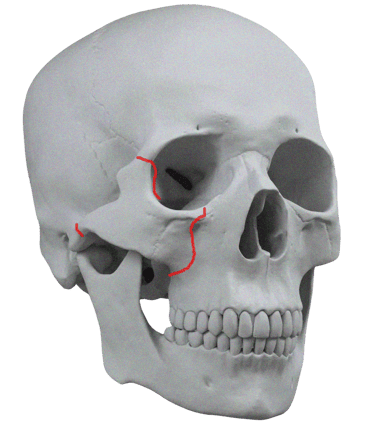
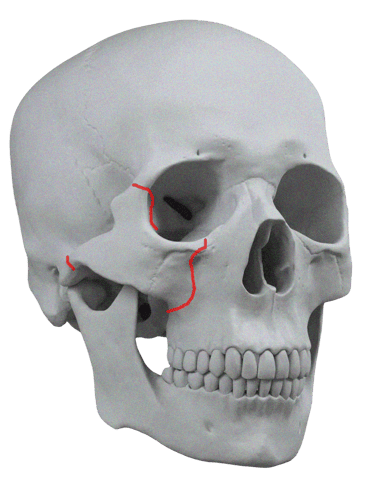
A cheekbone fracture affects the bones of the midface, including the orbit and the maxilla. Dr. Khansa will evaluate your facial width, projection, contour, eye support, chewing, and sensation.
Upper jaw (maxillary) fractures
A maxillary fracture may affect the upper jaw, cheek, nose, eye sockets, sinuses, and teeth. Dr. Khansa will evaluate your facial contour, eye support, chewing, sensation and bite.
Lower jaw (mandibular) fractures
A lower jaw fracture may affect the bite, chewing, speech, mouth opening, teeth, and sensation.
Forehead (frontal bone) fractures
Fractures involving the forehead or frontal bone may occur with other head injuries. Urgent evaluation is especially important when there are neurological symptoms, significant swelling, or concerns involving the skull or brain. Frontal sinus fractures may involve the outer table of the bone, the inner table, or both. The inner table of the frontal sinus is in close proximity to the dura and the brain, and prompt evaluation is essential.
A person can have more than one facial fracture. The treatment plan must account for the entire injury rather than focusing on only the most visible area.


Fracture affecting nasal bones (frontal view)
Fracture affecting nasal bones (oblique view)
Fracture affecting orbital floor and inferior orbital rim
Zygomaticomaxillary complex fracture (frontal view)
Zygomaticomaxillary complex fracture (oblique view)
Maxillary fracture (LeFort 1)
Mandible fractures (frontal view)
Mandible fractures (oblique view)
Frontal bone fracture
Why Facial Fractures Require Evaluation by a Board-Certified Plastic Surgeon
The face contains very important structures that may be affected by a fracture, including bones, teeth, blood vessels and nerves. In addition, facial fractures may affect the eye, the brain and the sinuses.
Dr. Khansa is a craniofacial fellowship-trained, board certified plastic surgeon, who is a specialist in the evaluation and management of any facial fracture.
When Does a Facial Fracture Need Surgery?
Some facial fractures can be monitored while they heal. Surgery may be necessary when the fracture affects bone alignment, facial function, the eye, breathing, the bite, facial contour, or stability.
The decision depends on factors such as:
The location and pattern of the fracture
Whether the bone fragments are displaced
Eye movement, vision, and orbital support
Facial sensation and movement
The patient’s bite and ability to open the mouth
Associated wounds or soft-tissue injury
The patient’s overall health and other injuries
Timing, swelling, and imaging findings
After his evaluation, Dr. Khansa will be able to determine whether your particular fractures needs surgery, or can be allowed to heal without surgery.
Facial Fracture Repair
When surgery is appropriate, repair may involve repositioning fractured bones and securing them with small plates and screws. The approach depends on the location and pattern of the fracture. Incisions may be placed inside the mouth, near natural facial creases, or in other locations selected for access and safety.
The surgical plan may involve:
Restoring the position and stability of fractured bones
Protecting the eye and surrounding structures
Improving facial alignment and contour
Addressing the bite or jaw function when relevant
Repairing associated soft-tissue injuries when appropriate
Managing wounds and planning follow-up care
Dr. Khansa will explain the proposed procedure, anesthesia, potential need for additional specialists, and expected recovery.


Open reduction and internal fixation of mandible fractures
Open reduction and internal fixation of zygomaticomaxillary complex fracture
Facial Fractures in Children and Teens
Children and teenagers require individualized evaluation because their facial bones are still developing. Treatment decisions may consider growth, dental development, the injury’s effect on function, cooperation, anesthesia, and the specific fracture pattern.
Parents or guardians should bring the child’s medical history, medication and allergy information, emergency-department or hospital records, imaging reports, and details about the injury.
Recovery after Facial Fracture Repair
Recovery depends on the fracture, the procedure, other injuries, the patient’s health, and whether the eye, jaw, teeth, or nerves are involved. Dr. Khansa will provide instructions specific to the injury and repair.
During recovery, patients may experience swelling, bruising, soreness, numbness, tightness, difficulty chewing, or temporary changes in facial movement or sensation. These symptoms are usually temporary and will improve gradually
Why Choose Dr. Khansa for Facial Fracture Repair in Austin?
Harvard Medical School graduate
Certified by the American Board of Plastic Surgery (ABPS)
2026 Austin Monthly Top Doctor
Over 70 peer-reviewed publications. A surgeon who stays at the cutting edge
Craniofacial-trained. Specialized expertise in the bones, cartilages, and soft tissue of the face beyond standard plastic surgery training
Evening and weekend consultations available
Conveniently located off the Mopac at 3305 Northland Dr., Suite 210, Austin, TX 78731

Textbook chapter: Scars and Scar management. Essentials of Plastic Surgery, 3rd edition.


Check our some of Dr. Khansa's research papers and textbook chapters on facial injuries and scars:
🔍 Should I go to the emergency room or schedule a consultation?
If you have difficulty breathing, uncontrolled bleeding, loss of consciousness, confusion, severe head or neck injury, vision loss or major vision changes, an eye that cannot move normally, or other life-threatening symptoms, go to the emergency room or call emergency services
If you do not have any of those symptoms, schedule an appointment with Dr. Khansa as soon as possible to be evaluated.
🔍 Can a facial fracture heal without surgery?
Some fractures can be observed and allowed to heal without an operation. Others may need repair because of displacement, instability, eye involvement, functional problems, or changes in facial alignment. The decision depends on the injury and imaging findings.
🔍 How soon should I be evaluated after a facial injury?
Emergency symptoms require immediate care in an emergency department. Otherwise, you should schedule an appointment to be seen by Dr. Khansa as soon as possible.
🔍 Can facial fractures affect vision?
Fractures around the eye can affect eye movement, vision, sensation, and the position of the eye. Any new vision loss, major vision change, severe eye pain, or inability to move the eye normally requires urgent medical evaluation at an emergency department.
🔍 Can a facial fracture change my bite?
Yes. Fractures involving the upper or lower jaw may affect the way the teeth fit together or make chewing and opening the mouth difficult. If this is the case, surgery may be needed to restore your bite.
🔍 Will facial fracture repair leave a scar?
The answer depends on the fracture and surgical approach. Some incisions may be inside the mouth or placed in less visible areas. Other injuries may require access near the fracture. Dr. Khansa takes great care to minimize scars during facial fracture repair.
🔍 Can children have facial fracture repair?
Children can receive evaluation and repair when appropriate. Treatment must account for facial growth, dental development, the fracture pattern, function, health, and anesthesia needs. Dr. Khansa specializes in facial trauma for adults, teens and children.
FAQs
Schedule your facial fracture evaluation in Austin today
Ready to schedule? Dr. Khansa offers evening and weekend appointments.
📍 3305 Northland Dr., Suite 210, Austin, TX 78731
📞 (512) 615-6566 (call or text)
🗓️ Schedule online below
3305 Northland Dr., Suite 210, Austin, TX 78731
DrKhansa@KhansaPlasticSurgery.com
(512) 615-6566 (call or text)
(281) 962-8002
© 2026. All rights reserved.